

Investing in wellness often starts with the simplest daily habit: how you drink your water. Across Britain, conscious homeowners and wellness enthusiasts are swapping disposable plastic and sterile stainless steel for handcrafted metal drinkware. A premium designer copper water bottle UK shoppers choose combines centuries-old Ayurvedic tradition with refined design for the modern home, studio, or desk.
Yet, British buyers frequently ask practical questions before buying. Will UK mains tap water react badly with copper? How do you distinguish between pure metal and cheap brass alloys?
This comprehensive guide answers your questions on water chemistry, daily care, and selecting an authentic designer copper water bottle crafted to last.
Does UK Tap Water React Badly With a Copper Bottle?
The short answer is no, provided you use your bottle correctly. British tap water is among the most strictly regulated in the world, but water composition varies across regions.
How Does Hard vs. Soft UK Water Interact With Pure Copper?
The reaction between copper and water depends primarily on water hardness and pH:
-
Hard Water (London, South East, East Anglia): Rich in dissolved calcium and magnesium carbonates, hard water has a naturally neutral to slightly alkaline pH (typically 7.2 to 8.2). This alkalinity creates a protective mineral barrier, slowing down metal leaching while naturally oxidising the inside of the bottle into harmless, dark copper oxide.
-
Soft Water (Scotland, Wales, parts of Northern England): Soft water contains fewer dissolved minerals and can occasionally be slightly acidic. While safe to drink, storing acidic water in an unlined vessel for multiple days can cause excessive copper ions to dissolve.
According to guidelines from the Drinking Water Inspectorate (DWI), the legal standard for copper in UK public drinking supplies is 2.0 mg/L. Storing drinking water in a premium copper water bottle for the traditional resting window of 6 to 8 hours releases only trace amounts—well below safe national thresholds.
Can You Fill Your Bottle Straight From the Kitchen Tap?
Yes, you can fill your bottle straight from your cold water tap. However, you should follow two simple rules:
-
Always draw water from the cold mains supply, never the hot water tap, because domestic hot water cylinders can soften water and accelerate metal uptake.
-
If your property has older internal copper pipework that has been sitting idle overnight, let the tap run cold for 15 seconds before filling your bottle.
What Are the Real Health Benefits of Storing Water in Copper?
In Ayurveda, water stored overnight in a pure copper vessel is known as Tamra Jal. Ancient practitioners valued this practice for balancing bodily energies and supporting digestive wellbeing.
Modern medical research validates several of these traditional principles:
-
Natural Antimicrobial Action: Research published in medical journals confirms that copper surfaces possess an "oligodynamic" effect. Copper ions naturally neutralise common waterborne bacteria, including E. coli and Salmonella, within hours of contact.
-
Essential Trace Mineral Support: The NHS notes that adults require approximately 1.2 mg of copper daily to maintain healthy red blood cells, support the immune system, and aid nerve health. While food remains your primary source, water stored in pure copper provides bioavailable trace minerals.
-
Free Radical Defence: Copper acts as an essential cofactor for superoxide dismutase, a vital antioxidant enzyme produced naturally by human cells to protect tissues from oxidative stress.
How Do You Identify Authentic, Pure Copper From Cheap Fakes?
As copper drinkware grows in popularity across Britain, low-grade alternatives flood the market. Many mass-produced bottles use thin sheet metal or toxic alloys like zinc and lead, coated with synthetic clear lacquers on the inside.
Look for these essential quality markers:
-
Uncoated Interior: The interior must be 100% raw, untreated copper. A synthetic lacquer lining completely stops the water from touching the metal, eliminating any wellness benefit.
-
Substantial Weight: A handcrafted 950 ml copper vessel should feel solid and heavy in your hand, typically weighing over 280 grams when empty.
-
Natural Colour and Tone: Pure copper possesses a distinctive reddish-gold warmth. If the metal appears overly bright yellow, it contains brass; if it looks dull and greyish underneath, it is plated aluminium.
-
Handmade Hammer Marks: Hand-spun and hand-engraved bottles feature subtle, organic variations. Machine-stamped replicas look uniform, thin, and hollow.
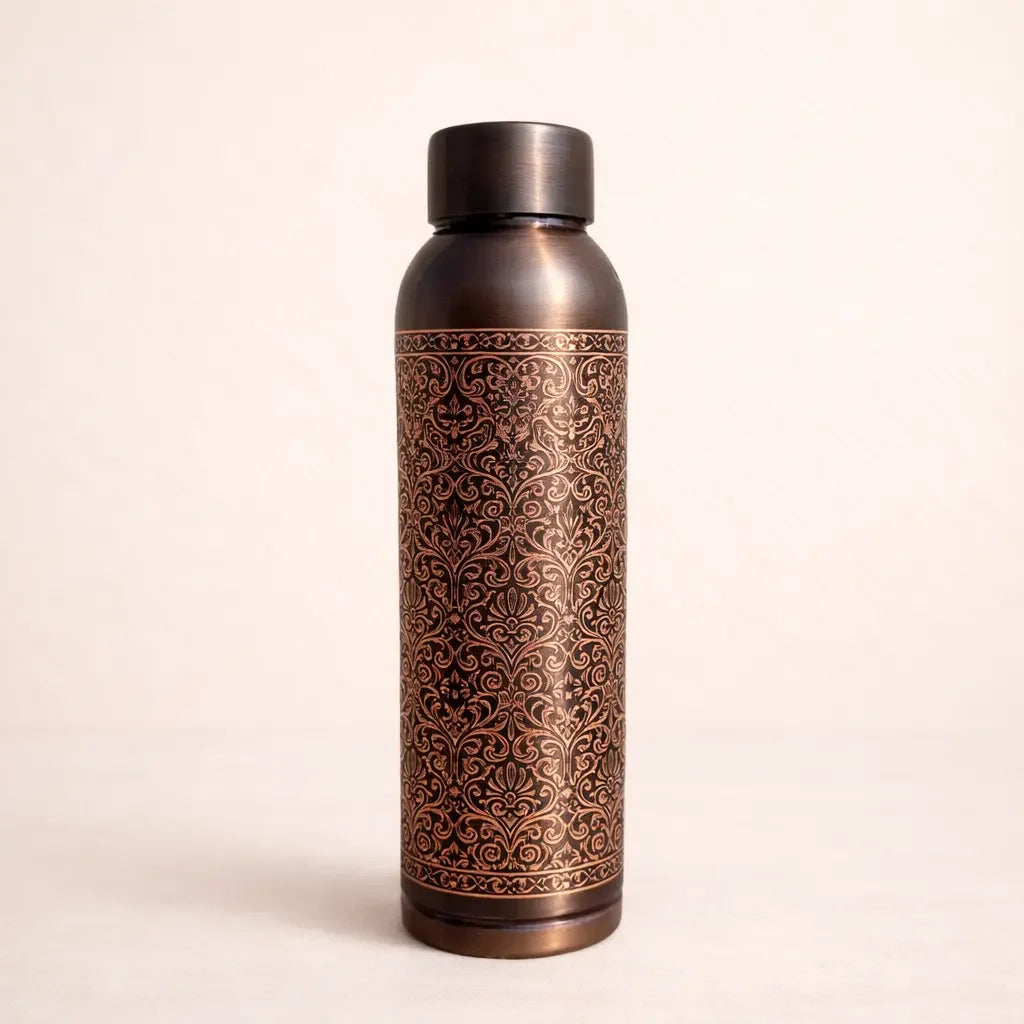
If you appreciate intricate, traditional metalwork, explore our Pure Copper Antique Engraved Water Bottle (950ml), hand-chiseled by skilled heritage coppersmiths.
Which Designer Styles Best Fit Your Everyday Aesthetic?
Functional wellness can also serve as decorative homeware. Artisans have elevated pure copper bottles into collectible statement pieces through specialized enamel work.
Traditional Hand-Enamelled Meenakari Art
Originating in royal courts, Meenakari involves fusing vivid mineral colours onto the outer surface of engraved metal:
-
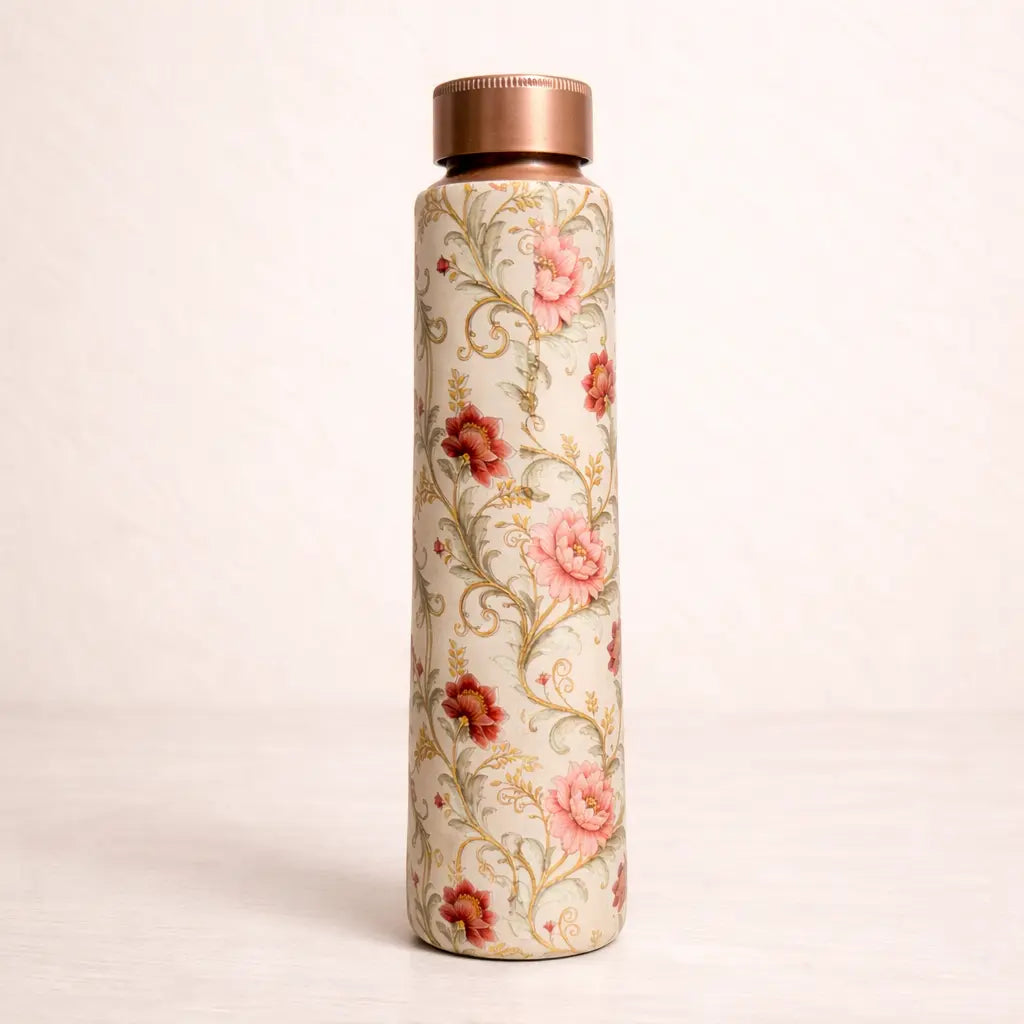
For a classic aesthetic, the Pure Copper Floral Meenakari Water Bottle (950ml) pairs protective outer enamel with a pure, raw interior that never compromises water quality.
-
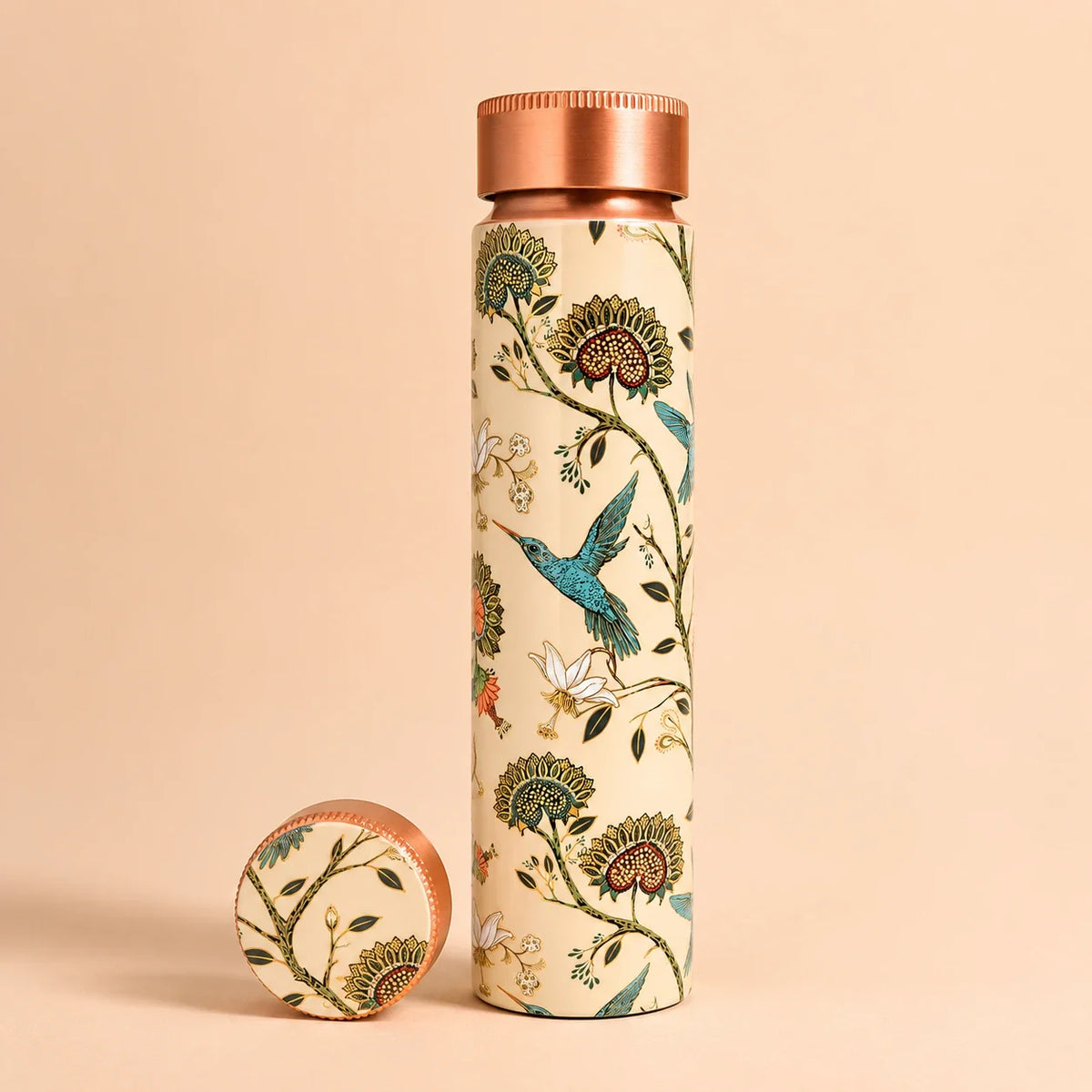
If you favour nature-inspired motifs, the Pure Copper Floral Bird Meenakari Water Bottle (950ml) showcases hand-applied botanicals that brighten any bedside table or workstation.
Modern Contemporary Finishes
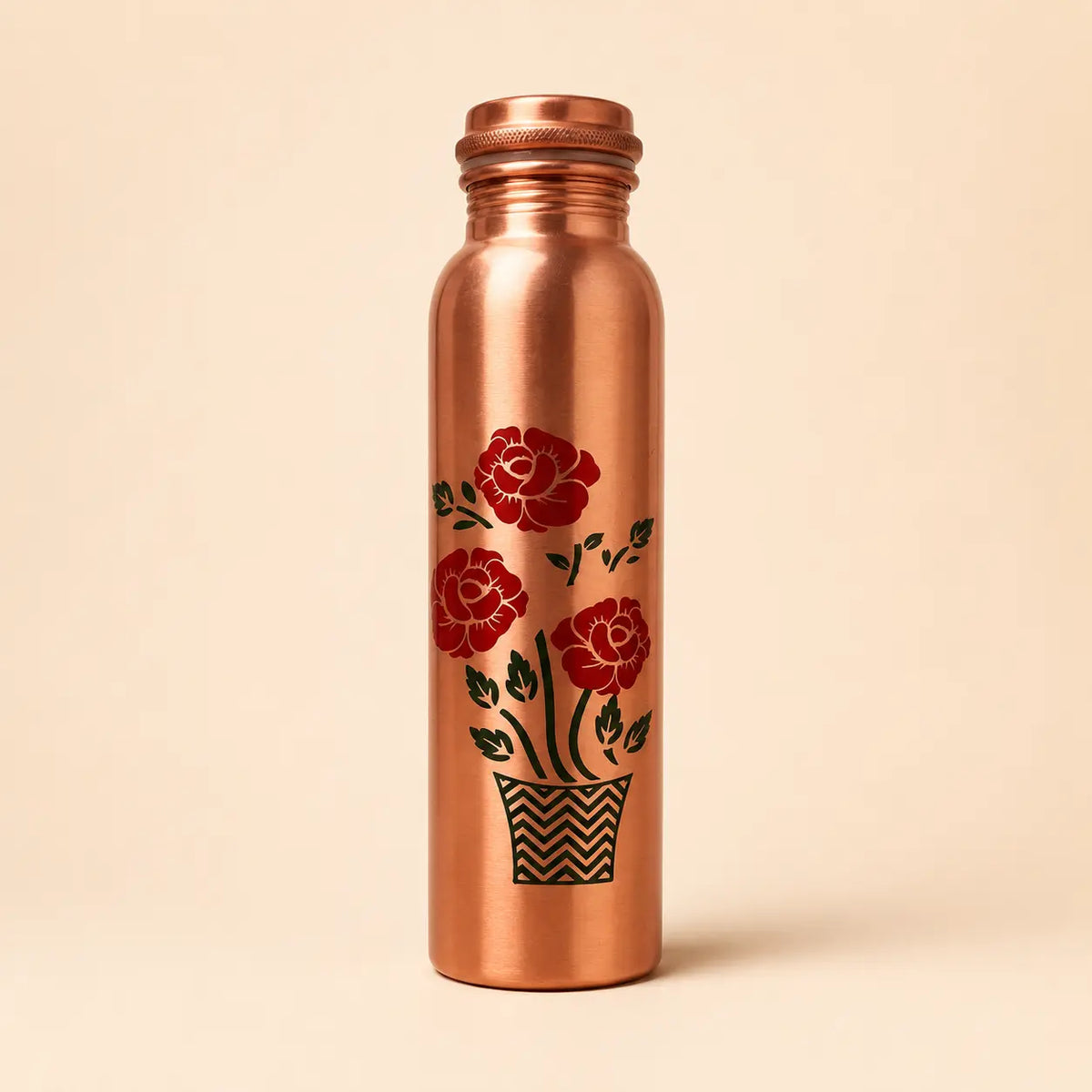
Prefer a cleaner pop of colour? Contemporary options like the Pure Copper Magic Water Bottle Colorbloom (950ml) blend artisanal craftsmanship with modern colour palettes, giving you an eye-catching hydration companion for travel and the office.
How Should You Clean and Maintain Your Copper Bottle?
Pure copper breathes, reacts, and changes with use. This natural process is called oxidisation, and it proves your bottle is authentic, unlacquered metal.
Why Does the Interior Turn Dark or Spotted?
When pure copper meets oxygen and minerals in water, it forms copper oxide. This appears as dark grey, brown, or black markings inside your vessel. It is completely non-toxic and natural.
However, you should avoid blue-green patina (copper carbonate), which only forms if water is left stagnant for weeks or comes into contact with acids.
Simple 3-Step Cleaning Method (No Chemicals)
Never wash your copper vessel in a dishwasher or scrub it with harsh detergents. Clean it naturally every fortnight using simple kitchen ingredients:
-
Create the Natural Cleanser: Add two tablespoons of fresh lemon juice or distilled malt vinegar and one tablespoon of fine table salt into the bottle.
-
Shake and Dissolve: Add 100 ml of warm water. Fasten the cap tightly and shake vigorously for 60 seconds. The mild acid dissolves the dark oxide layer instantly, restoring the glowing pink interior.
-
Rinse Thoroughly: Pour out the solution, rinse three times with fresh cold tap water, and leave the bottle upside down on a drying rack to dry completely. Wipe the painted or engraved exterior gently with a soft microfibre cloth.
Frequently Asked Questions
Can I put lemon, fruit slices, or squash in my copper water bottle?
No. Never put citrus juice, lemon slices, vinegar, cordial, or carbonated drinks inside a copper bottle. Acidic liquids corrode raw copper rapidly, causing excessive metal to leach into the drink. Only store plain, still drinking water in your copper vessel.
Can I store boiling hot water or herbal tea in a copper bottle?
No, pure copper is an exceptional thermal conductor. Filling it with boiling water makes the exterior dangerously hot to hold and damages hand-painted or enamelled coatings. Always use room temperature or cold water.
How long should I leave water inside the bottle before drinking?
For optimal wellness benefits, store fresh water for 6 to 8 hours (or overnight) at room temperature. Drink one or two glasses in the morning on an empty stomach. Do not leave the same water sitting in the bottle for longer than 24 hours.
Will hard water in London cause limescale inside my copper bottle?
Yes, high-mineral tap water in London and the Home Counties can leave cloudy white calcium deposits alongside natural dark copper oxide. The periodic lemon juice and salt rinse dissolves both limescale and excess oxidisation simultaneously in under a minute.
Can I place my copper bottle inside the fridge?
You can place it in the fridge, but room temperature water is recommended. Chilling water slows down the beneficial oligodynamic interaction between copper ions and water. If you prefer chilled water, refrigerate it for only 30 minutes before drinking.
Is drinking from a copper bottle safe for everyone?
Yes, for the vast majority of healthy adults. However, individuals diagnosed with Wilson’s disease or other rare genetic disorders that prevent normal copper excretion must avoid supplemental copper drinkware and consult their GP.
References
-
Drinking Water Inspectorate (DWI): Water Supply (Water Quality) Regulations 2016 – Standards for Copper in Public Supplies (dwi.gov.uk)
-
NHS UK: Vitamins and Minerals – Essential Trace Elements and Daily Dietary Requirements (nhs.uk)
-
National Center for Biotechnology Information (NCBI) / PubMed: Antimicrobial Properties of Copper Surfaces against Human Pathogens (ncbi.nlm.nih.gov/pmc)
-
British Geological Survey (BGS): Groundwater Quality and Hardness Distribution across the United Kingdom (bgs.ac.uk)


